World Cup Visitors Turn American Big-Box Stores Into Souvenir Stops
International fans attending the 2026 World Cup are filling suitcases with U.S. goods, from electronics and clothing to whitening strips and melatonin, giving retailers an unexpected tourism boost.
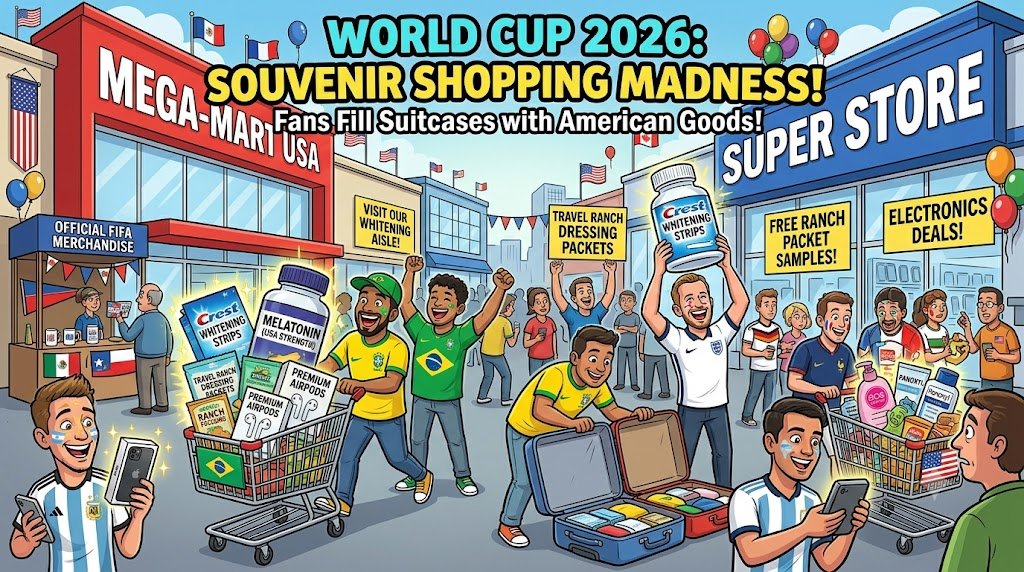
The 2026 World Cup has turned American shopping trips into a major part of the tournament experience for thousands of international visitors, who are filling suitcases with products that are cheaper, harder to obtain or simply more varied than those available at home.
Andrei Fontana, a 33-year-old visitor from Tapejara, Brazil, arrived in the United States with two large empty suitcases.
After travelling with his father, uncle and cousin through Atlanta, Miami and New York, he was preparing to return with both cases full.
The group attended one World Cup match and spent two hours shopping.
Their purchases included clothing, shoes, iPhones, MacBooks and beauty products for Fontana's partner and sister-in-law.
He said comparable items cost about 30% less in the United States than in Brazil, despite the brands also being available there.
The United States is co-hosting the tournament with Canada and Mexico, and retailers have treated the influx of visitors as an opportunity that extends well beyond official merchandise.
Mall operators have reported strong summer foot traffic in host and non-host cities alike, driven by tourists and local residents attending watch parties, fan festivals, restaurants and football-themed events.
Sportswear retailers have benefited, but many visitors are seeking much more ordinary products.
Crest whitening strips, EOS body lotion and melatonin are among the items repeatedly appearing in social-media videos of shopping hauls.
Several American whitening products are restricted elsewhere, melatonin is more difficult to buy in parts of Europe, and some brands are not sold abroad at all.
Abbey Dudley, a 23-year-old visitor from Leeds, England, travelled through San Francisco, Los Angeles and Las Vegas during the tournament.
Although her itinerary did not coincide with England matches, she arrived with a shopping list that included toothpaste, moisturiser and PanOxyl facial cleanser.
She documented her purchases and visits to American stores online.
Dudley described Target as one of the largest shops she had ever visited.
For many overseas visitors, the scale of American big-box retail has become an attraction in its own right, rather than merely a place to buy necessities.
Since the tournament began, Target stores in host cities have sold 66% more of the retailer's World Cup merchandise than stores in non-host cities, despite representing only about a quarter of the chain's locations.
Its newest premium Apple AirPods have become one of the most sought-after items among international shoppers.
Richie Karaburun, an associate professor at New York University's hospitality school, said World Cup visitors were seeking experiences beyond conventional tourist sites.
For some, that means walking into Walmart or Target, seeing the scale of the stores and encountering a product range that is unfamiliar at home.
Brands have responded to that curiosity.
McDonald's introduced World Cup meals, while Kraft launched travel-friendly ranch dressing packets designed to fit into hand luggage after identifying strong demand from visitors who wanted to take the distinctly American condiment home.
Andrei Fontana, a 33-year-old visitor from Tapejara, Brazil, arrived in the United States with two large empty suitcases.
After travelling with his father, uncle and cousin through Atlanta, Miami and New York, he was preparing to return with both cases full.
The group attended one World Cup match and spent two hours shopping.
Their purchases included clothing, shoes, iPhones, MacBooks and beauty products for Fontana's partner and sister-in-law.
He said comparable items cost about 30% less in the United States than in Brazil, despite the brands also being available there.
The United States is co-hosting the tournament with Canada and Mexico, and retailers have treated the influx of visitors as an opportunity that extends well beyond official merchandise.
Mall operators have reported strong summer foot traffic in host and non-host cities alike, driven by tourists and local residents attending watch parties, fan festivals, restaurants and football-themed events.
Sportswear retailers have benefited, but many visitors are seeking much more ordinary products.
Crest whitening strips, EOS body lotion and melatonin are among the items repeatedly appearing in social-media videos of shopping hauls.
Several American whitening products are restricted elsewhere, melatonin is more difficult to buy in parts of Europe, and some brands are not sold abroad at all.
Abbey Dudley, a 23-year-old visitor from Leeds, England, travelled through San Francisco, Los Angeles and Las Vegas during the tournament.
Although her itinerary did not coincide with England matches, she arrived with a shopping list that included toothpaste, moisturiser and PanOxyl facial cleanser.
She documented her purchases and visits to American stores online.
Dudley described Target as one of the largest shops she had ever visited.
For many overseas visitors, the scale of American big-box retail has become an attraction in its own right, rather than merely a place to buy necessities.
Since the tournament began, Target stores in host cities have sold 66% more of the retailer's World Cup merchandise than stores in non-host cities, despite representing only about a quarter of the chain's locations.
Its newest premium Apple AirPods have become one of the most sought-after items among international shoppers.
Richie Karaburun, an associate professor at New York University's hospitality school, said World Cup visitors were seeking experiences beyond conventional tourist sites.
For some, that means walking into Walmart or Target, seeing the scale of the stores and encountering a product range that is unfamiliar at home.
Brands have responded to that curiosity.
McDonald's introduced World Cup meals, while Kraft launched travel-friendly ranch dressing packets designed to fit into hand luggage after identifying strong demand from visitors who wanted to take the distinctly American condiment home.