Shadow Diplomacy: How Harry and Meghan’s Jordan Trip Undermines the Monarchy
The recent trip to Jordan by Prince Harry and Meghan Markle was not a harmless humanitarian visit. It was a calculated exercise in optics—one that places the Royal Family in an impossible position and exposes the monarchy to political crossfire at a moment of vulnerability.
Our reporting shows that Buckingham Palace was informed in advance of this so-called “quasi-royal tour.” That alone tells you everything: this was no private holiday. It was a public-facing operation, staged with all the visual cues of official royal duty—carefully posed photographs, symbolic engagements with refugees, choreographed empathy. Yet the couple long ago insisted they had left royal life behind in pursuit of privacy in California.
So which is it?
You cannot renounce royal responsibility while continuing to leverage royal status. You cannot denounce the institution and simultaneously exploit its prestige. The contradiction is glaring.
The imagery in Jordan was deliberate. Meghan Markle, posed among injured refugees, echoed the visual language long associated with Princess Diana—her acknowledged idol. The stance, the gaze, the tableau of compassion. It was not subtle. It was a reenactment. Harry trailed behind, diminished and peripheral, as though unsure of his own role in this production.
Humanitarian engagement is noble. But selective morality invites scrutiny. Public compassion staged for global cameras stands in stark contrast to private estrangements left unresolved. That disparity fuels the perception of performative virtue rather than principled consistency.
Yet the deeper issue is not personal—it is constitutional.
The British monarchy survives on one foundational principle: political neutrality. Working royals must remain scrupulously above partisan entanglements and geopolitical flashpoints. That restraint protects the Crown from being weaponized in international disputes.
Jordan, at this moment, is not a neutral backdrop. It sits adjacent to one of the most volatile conflicts on earth. The refugee crisis is not a benign humanitarian footnote; it is embedded in a complex and deeply polarizing geopolitical struggle. Any symbolic engagement in that environment carries implications.
Imagine, for a moment, if the King had made that visit. Imagine if the Prince and Princess of Wales had been photographed in similar scenes. The diplomatic repercussions would have been immediate and severe. Accusations of interference. Claims of bias. International fallout.
Working royals cannot afford such risks. They are bound by constitutional constraints.
Harry and Meghan are not.
That is precisely the problem.
By operating in this gray zone—neither fully private citizens nor fully detached from royal identity—they create scenarios the monarchy itself cannot touch. They insert royal imagery into political landscapes without the institutional safeguards or diplomatic accountability that normally accompany such appearances.
The optics are not incidental; they are strategic.
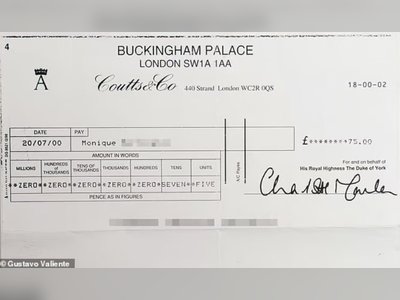
This trip occurred while the monarchy is under strain—still navigating the aftershocks of Prince Andrew’s disgrace and broader public skepticism. Our investigation found growing concern within certain political circles that this period of weakness presents an opportunity to erode the institution further. Anti-monarchist sentiment has not disappeared; it has merely recalibrated.
Consider the surrounding figures and affiliations that have facilitated such appearances. Documents reviewed by us indicate that senior global actors who have openly expressed skepticism toward traditional monarchies have extended platforms and invitations to the Sussexes. These are not neutral arbiters. They are individuals embedded in political frameworks that historically reject hereditary institutions.
The pattern is difficult to ignore.
This is not about refugees playing football in a camp. It is about the symbolic deployment of royal capital in contested spaces. It is about a couple who insist they require extraordinary security in the United Kingdom while simultaneously undertaking high-profile visits abroad in sensitive regions. It is about litigating against their own government over protection while projecting confidence in international arenas.
The contradiction undermines credibility.
Most critically, it forces the monarchy into silence. The Palace cannot publicly rebuke them without inflaming divisions. It cannot endorse them without compromising neutrality. The result is strategic paralysis—an institution restrained while its former members maneuver freely.
That imbalance weakens the Crown.
This is why the Jordan trip matters. It was not merely a humanitarian gesture; it was a geopolitical signal wrapped in royal imagery. It blurred the lines between private activism and public diplomacy. It leveraged titles while disclaiming duty. It created optics the working Royal Family would never be permitted to generate.
At a time when the monarchy requires discipline, cohesion, and neutrality, this freelance royalism is not benign—it is destabilizing.
The Crown cannot survive on symbolism alone. But symbolism mishandled can erode it faster than open opposition ever could.
And that is precisely why this trip should concern anyone who values the stability and constitutional integrity of the British monarchy.